
· Maya Colton
What toe spacers actually do for your feet
I have recommended toe spacers to runners, yoga students, and desk workers for years, and the question I hear most is always the same: what do these things actually do? The internet gives you two bad answers. Sellers promise straightened toes in weeks. Skeptics dismiss the whole category as a gimmick. The truth sits in the middle, and it is the part that decides whether a $19.95 gel pair earns a place next to your couch.
What toe spacers actually do
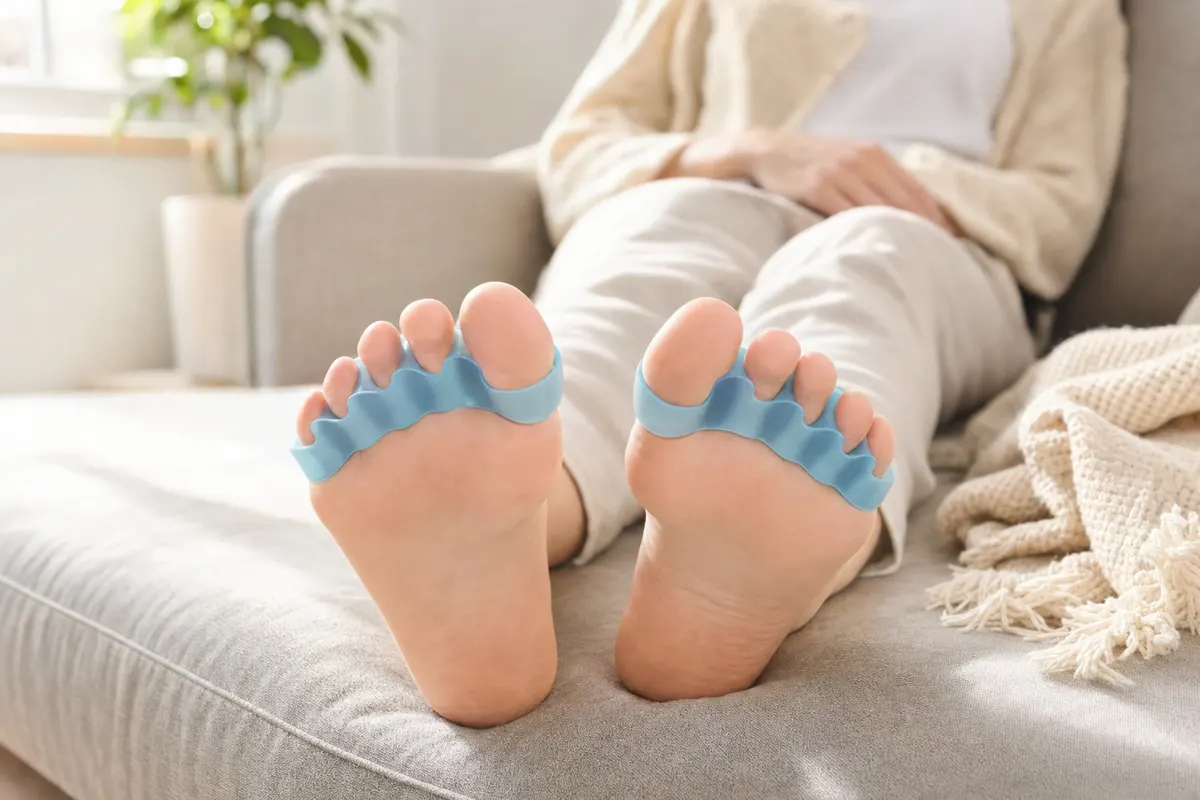
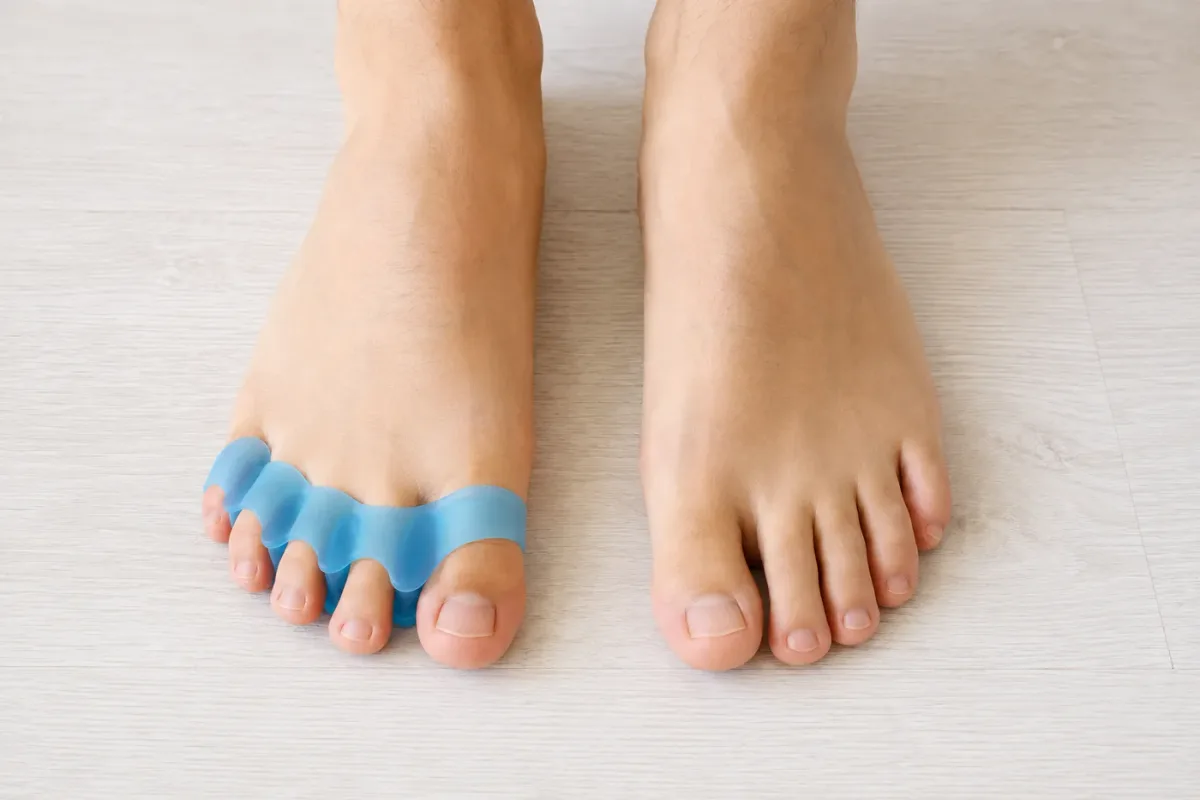
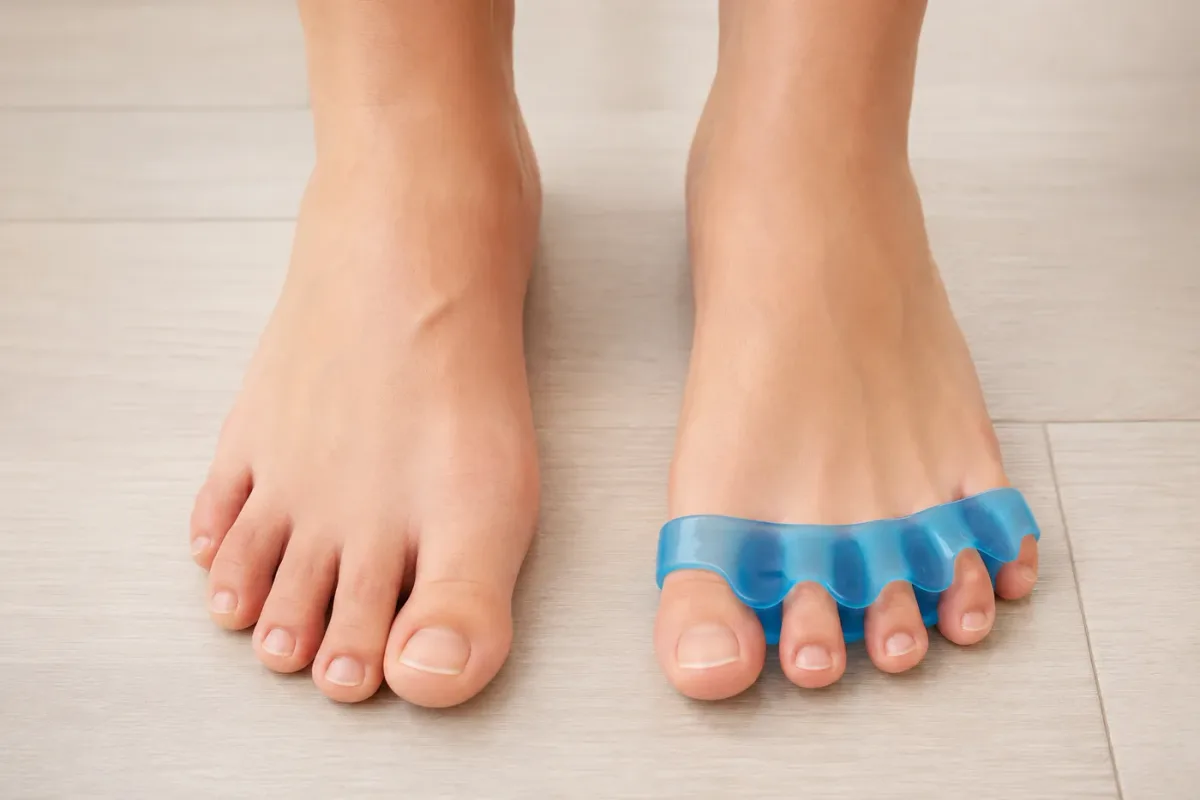
The mechanism is not mysterious. A toe spacer is a piece of soft gel or silicone that sits between your toes and holds them apart at roughly the width your foot would naturally take if it had never been squeezed into tapered shoes. While the spacer is in place, your toes are spaced. That part is not a claim, it is geometry.
Most conventional shoes narrow toward the front, so your toes spend eight to twelve hours a day pressed together. Slide a spacer on at the end of that day and two things happen immediately: the soft tissue between the toes decompresses, and the small muscles that splay the toes get a gentle, passive stretch. Many people describe the sensation as the foot equivalent of taking off a tight watch. That immediate relief is the defensible core of what this product does, and it is why I keep a pair next to my couch. It is also why first impressions are so consistent: the effect does not require weeks of faith, because you feel the decompression within the first minute of the first session, and you can judge for yourself whether it is worth repeating. If you want to know how it feels in practice, our verified buyer reviews describe it better than I can.
What the evidence really shows
Here is where I refuse to oversell. Crowded toes and bunions are genuinely common: a widely cited systematic review by Nix and colleagues (2010) estimated that 23% of adults aged 18 to 65 have some degree of hallux valgus, the condition where the big toe drifts toward its neighbors. That is nearly one in four adults, which explains why so many people feel that end-of-day pressure between their toes.
What the research does not give us is strong, long-term proof that wearing a spacer for a few hours a day permanently changes toe alignment. Studies on conservative tools in this space are small and short. So I will say plainly what many product pages will not: toe spacers gently space your toes and may help relieve pressure while you wear them, and for a while after. They are a comfort and mobility habit, like stretching your hamstrings. Nobody expects one hamstring stretch to permanently lengthen the muscle, yet nobody calls stretching useless either.
What to expect, and what not to
| Reasonable to expect | Not reasonable to expect |
|---|---|
| Immediate spreading and decompression while worn | Permanently straightened toes |
| A pleasant stretch through the forefoot | A fix for any diagnosed condition |
| Relief from that pressed-together feeling after narrow shoes | Results without consistent use |
| A useful pairing with wide toe box shoes | Comfort if you buy the wrong size or force the fit |
If a brand promises the right-hand column, walk away. That is also why our own product pages do not make those promises, and why we published a testing methodology you can actually read.
Who gets the most out of them
In my coaching work, four groups consistently report the biggest difference. First, people who spend long days in dress shoes or safety boots and want an evening decompression ritual. Second, yoga and mobility enthusiasts who use spacers during practice to wake up foot awareness. Third, runners who slide them on during post-run recovery while the feet are warm. Fourth, anyone transitioning to barefoot or minimalist footwear who wants their toes to rediscover their natural width.
One pattern I want to flag from experience: the people who are disappointed are almost always the ones who wore spacers twice, felt nothing dramatic, and quit. The people who are happiest built a small daily habit. If that sounds like work, read my guide on how long to wear toe spacers. Fifteen minutes a day is genuinely enough to start.
After running or a long day on your feet
Running and standing work load the forefoot the same way: hours of pressure that pack the toes together, first inside a tapered toe box, then under repeated impact or constant body weight. What a spacer adds afterward is purely mechanical. Slide a pair on while the feet are still warm and the gel holds every gap open, so the compressed tissue between the toes decompresses and the small muscles that splay them get their passive stretch at the moment they respond to it best. Runners in my coaching groups treat this as part of the cool-down: shoes off, spacers on for twenty to forty minutes while stretching or foam rolling, the same protocol as on our toe spacers for running page. People who stand through whole shifts, nurses, cooks, warehouse crews, run the identical session as an end-of-day reset instead. Neither group is reshaping anything; both are giving the forefoot the opposite input to the one it received all day, and both tend to keep the habit because the relief registers in the first minute rather than the first month.
Overlapping toes and bunion recovery: spacing one gap on purpose
The second family of use cases is narrower, literally: one specific gap needs the space. When a toe rides over its neighbor, the two press and rub with every step, and a separator tube seated in that gap holds them apart and cushions the contact for as long as it is worn. When the big toe drifts toward the second, the pattern behind hallux valgus, a spacer keeps that first gap open during the session and may help relieve the pressure of the two toes against each other. The mechanism is the same one this whole page describes: the toes are spaced while the spacer is in place, and they return to their habit once it comes off. Nothing here moves bone, and a joint that is painful, numb, or changing quickly belongs in front of a podiatrist, with a spacer alongside professional care rather than in place of it. What the product does is make the crowded hours more comfortable. The practical setups, sizing for smaller toes, in-shoe wear, which format for which toe, are laid out in our guides to toe spacers for bunions and hammer and overlapping toes.
Full-toe spacers or targeted tubes?
One more honest distinction. A five-toe gel spacer, like our $19.95 pair, spreads all four gaps at once and is the right tool for at-home sessions, yoga, and recovery. Separator tubes are small fabric-covered gel sleeves that slip over a single toe. Per our own 2026 measurements, our small tubes are a 3 x 1.5 x 2 cm ring and the large are 3.2 x 1.8 x 2.2 cm, which is slim enough to wear under a sock inside a roomy shoe. Tubes are the better choice when one specific toe, often the big toe or an overlapping neighbor, is the whole problem. We sell them as a 3-pack for $19.95 or a 6-pack for $24.95, and both formats come together in the Complete Toe Comfort Kit at $39.95.
The bottom line
For spreading your toes, relieving that end-of-day pressure, and building a healthier relationship with your own feet, a spacer does its job mechanically and from the first minute. For permanently reshaping your foot the evidence is not there, which is why this page does not claim it. At $19.95, with a 30-day money-back guarantee, what arrives is exactly the product described here. There is more on overnight wear, the rest of our guides, and a team that answers questions on the contact page.
If you have persistent foot pain, see a podiatrist.
Toe spacer questions, answered
Do podiatrists recommend toe spacers?
Practices vary. Some podiatrists suggest spacers as a comfort tool alongside roomier footwear, others reach for different conservative options first, and no single professional position covers the whole category. What is not in dispute is the mechanism: a spacer gently spaces the toes while it is worn. If you are already under care for a foot condition, ask your own podiatrist where a spacer fits in your plan.
What are the negatives of toe spacers?
The first sessions can feel like a strong stretch, which is why the right start is fifteen minutes a day rather than a full evening; the week-by-week ramp is in our guide on how long to wear toe spacers. The effect is also tied to use: toes are spaced while the spacer is worn, so a small daily habit beats an occasional marathon session. Pick your size carefully and let the fit settle over the first week.

Maya Colton · Foot Wellness and Barefoot Movement Coach
Trail runner and certified movement coach. I have worn toe spacers through 5 years of marathon training blocks, yoga teacher trainings, and long days in narrow shoes.