
· Maya Colton
Toe spacers and Morton's neuroma: which gap to space, and which one to leave alone
Almost all advice about toe spacers points one way: more room between the toes is good. With a neuroma that reasoning can turn on you, because the trouble is not a joint drifting sideways, it is a nerve in a corridor that has become too tight. I sell these products, and I would rather you knew that first.
What a neuroma is, and why it is not a bunion
Despite the name, a Morton's neuroma is not a tumor. It is a thickening of the fibrous tissue around one of the nerves passing between the metatarsal heads, most often in the second or third space counting out from the big toe. Because it sits under the ball of the foot rather than at a joint, it feels nothing like a bunion: burning, an electric zing into two neighboring toes, numbness, or the odd sense of a pebble underfoot. Tight toe boxes and high heels are the classic aggravators, so the advice on our bunion spacer page does not transfer.
Where spacing helps, and where it backfires
There is a version of this that makes sense. A forefoot compressed into tapered shoes all day gets real relief from a general decompression in the evening, and plenty of people with a grumpy ball of the foot enjoy that. There is also a version that does not. A neuroma sits in one specific web space, and a spacer placed there is more material in a corridor already short of room. Normal use feels like a stretch; a pressed nerve feels like burning, tingling or numbness. The second is never something to push through.
Why the gap that hurts is the wrong gap to fill
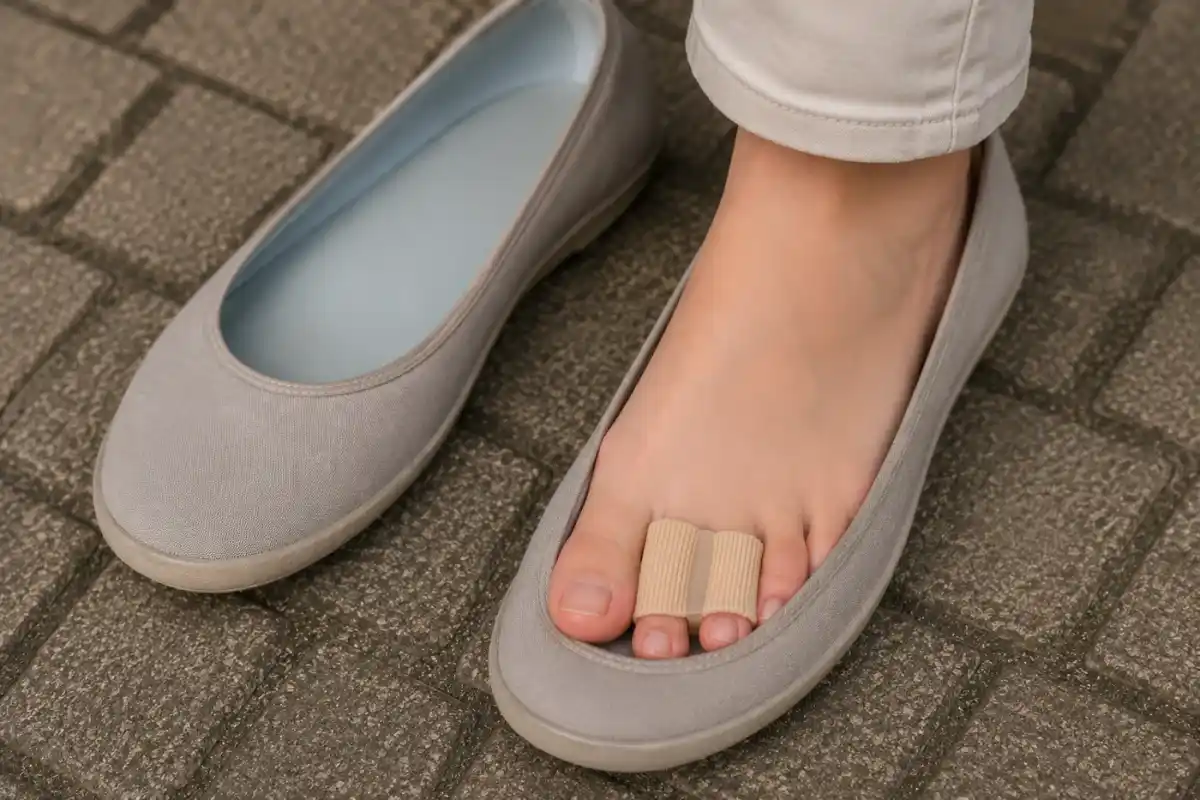
Our own measurements are the most useful thing we can offer here. A separator tube is a ring measuring 3 x 1.5 x 2 cm in size S and 3.2 x 1.8 x 2.2 cm in size L, and that width lands wherever you seat it. On a bunion that is the whole point: the material goes between the big toe and its neighbor and cushions skin that was rubbing. Between the third and fourth toes, with an irritated nerve underneath, the same millimeters work against you.
What the published evidence adds up to
Very little, in both directions. The only published work we found is a single case report from the 2020 AAPM&R Annual Assembly, where a spacer placed between the second and third toes lifted the neuroma above the plane of the metatarsal heads on ultrasound. One patient, graded Level V, the weakest tier of clinical evidence. Interesting, and far too thin to build a health claim on, which is the same standard applied in what toe spacers actually do.
size of the only published report we found on toe spacers and Morton neuroma symptoms, Level V evidence
— Seymour et al., AAPM&R Annual Assembly, PM&R Journal, 2020
measured ring size of the S separator tube, the width it adds to any gap (L: 3.2 x 1.8 x 2.2 cm)
— ToeRoom measurements, 2026
measured thickness of the gel five-toe pair, a barefoot tool rather than a shoe insert
— ToeRoom measurements, 2026
What matters more here than any spacer
Ask a foot health professional about a neuroma and the first answers are rarely about toe spacers. They are about footwear and load. A shoe with a genuinely wide toe box, a low heel and a sole that is not paper thin removes the compression that provokes the symptom, the logic behind our guide to barefoot shoes and toe spacers. The other common recommendation is a metatarsal pad placed behind the metatarsal heads, which spreads the bones rather than the toes: a different part of the foot from the one any toe spacer reaches, and one a clinician positions.
How to test a spacer without making things worse
If you know what is going on with your foot and still want to try, treat it as an experiment with a stop rule, not a routine. Five to ten minutes on the first attempt, seated, barefoot, nothing between the toes that hurt. Judge how the forefoot feels an hour later, not during. Any increase in burning, tingling, numbness or that pebble sensation means the experiment failed, not that you need to adapt. Stricter than the build-up in my wear-time schedule, deliberately.
Which of our two products suits this foot
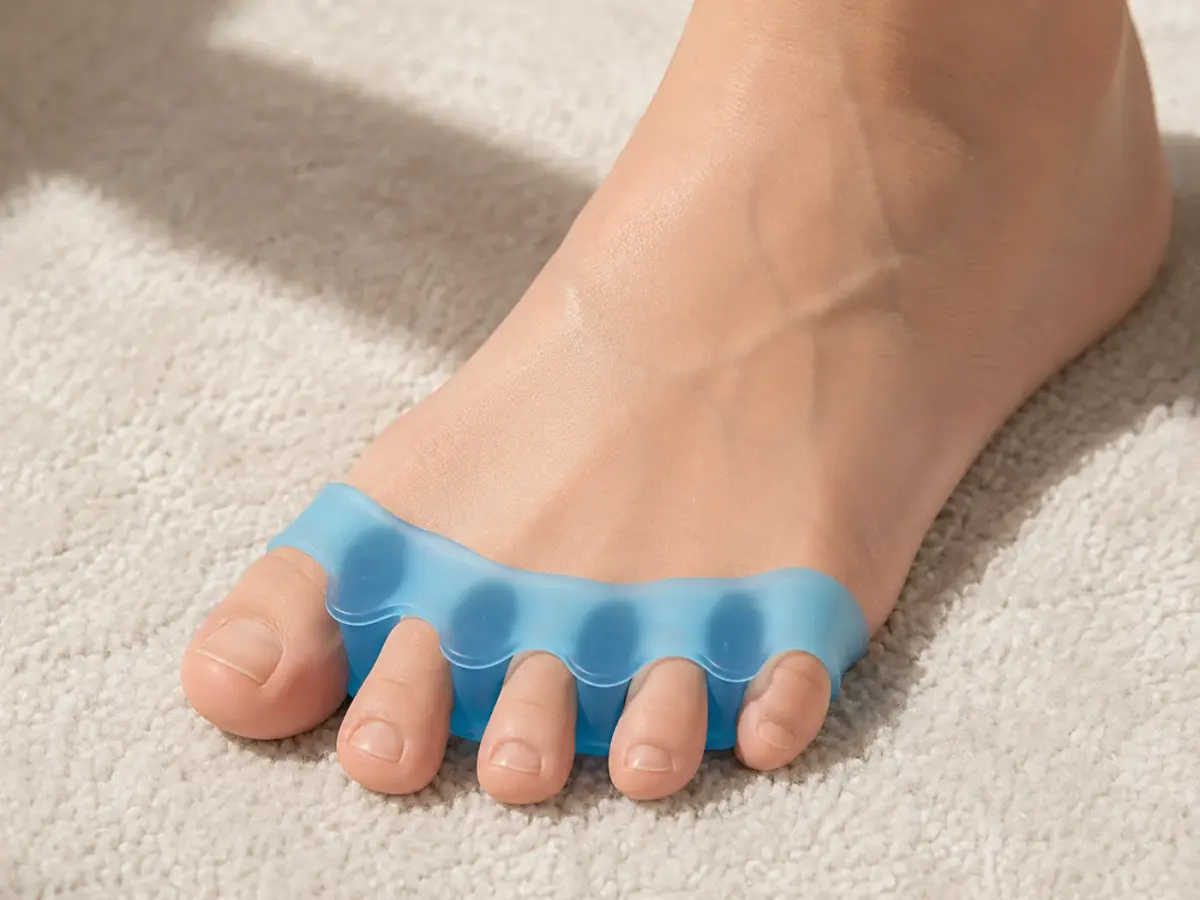
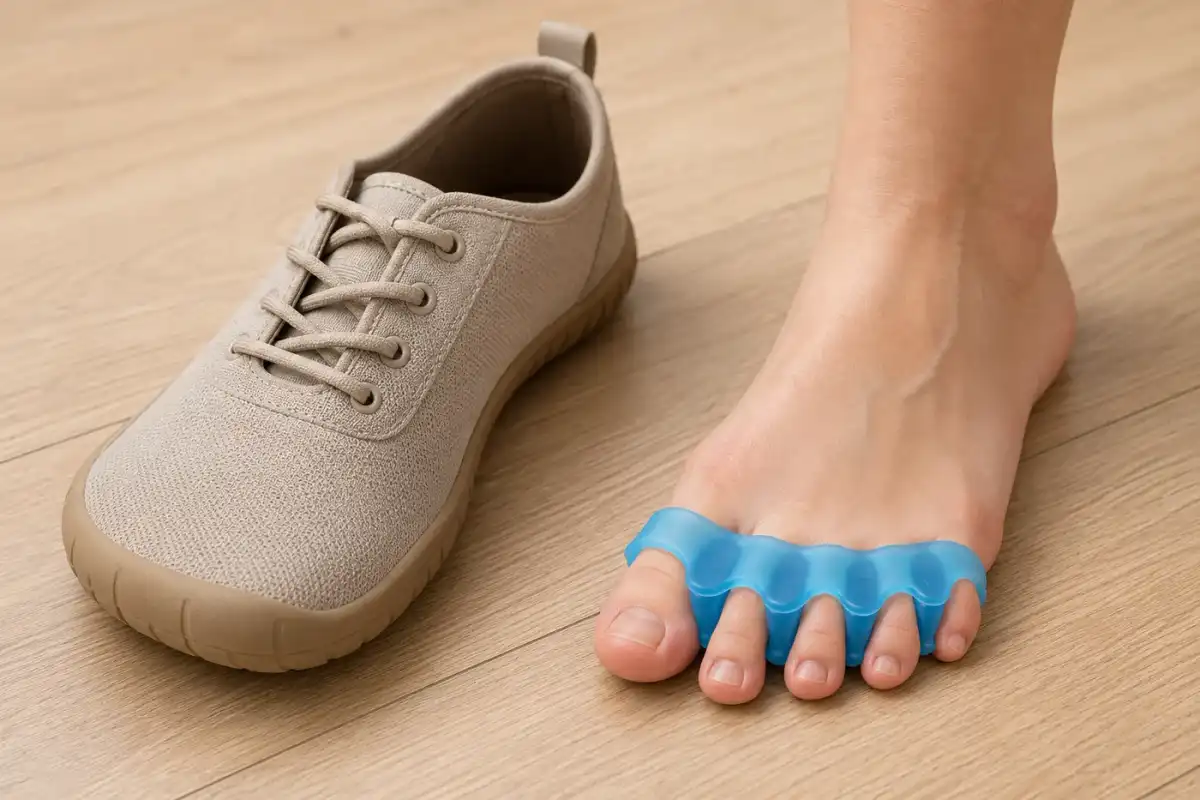
Of our own range, the soft gel five-toe pair at $19.95 is the one built for this foot: it spreads across all four gaps at once and is worn barefoot for short sessions, so no single web space carries the material. The targeted separator tubes are designed to do the opposite, concentrating width in one gap, which is what makes them the right tool on a bunion and the wrong one on a sore web space. That is a statement about where the material sits, not about the nerve. One verified buyer wrote: "Highly recommended. It’s the softest and most flexible spacer among the ones I’ve tried." Orders ship free, arrive in 6 to 10 business days, and carry a 30-day money-back guarantee.
The bottom line
Get the diagnosis first, then the shoes: a genuinely wide toe box and a low heel are what take the compression off, and a clinician is the person to ask about a metatarsal pad. Once you know what you are dealing with and want spacing in the evening, the gel pair is the soft-material end of our range and it comes back for a full refund inside 30 days. More in how we test, the other guides, the verified reviews, the home page, or email us.
ToeRoom sells comfort products and holds no medical qualification. Nothing here is a diagnosis or a treatment plan. For forefoot pain, burning, or numbness, see a podiatrist.
Morton's neuroma and spacer questions, answered
Can toe spacers cure Morton's neuroma?
No. Toe spacers are comfort products, not a treatment, and nothing on this site is a medical device. A neuroma is diagnosed and managed by a clinician. A spacer only changes how much room your toes have while you wear it.
Should I put a separator tube between the third and fourth toes?
That is the web space where a neuroma most often sits, so it is the gap we would be most cautious about filling. Our size S ring measures 3 x 1.5 x 2 cm, and that width goes wherever you place it.
Gel five-toe pair or a single tube for forefoot nerve pain?
The gel pair spreads its pressure across all four gaps and is worn barefoot for short sessions, so it concentrates less material in any single space. A tube puts everything in one gap. Neither is a treatment.
What do podiatrists usually suggest first?
Footwear with a genuinely wide toe box and a low heel, and often a metatarsal pad positioned behind the metatarsal heads. A metatarsal pad sits under the ball of the foot rather than between the toes, and it is placed and fitted by a clinician.

Maya Colton · Foot Wellness and Barefoot Movement Coach
Trail runner and certified movement coach. I have worn toe spacers through 5 years of marathon training blocks, yoga teacher trainings, and long days in narrow shoes.